DMax
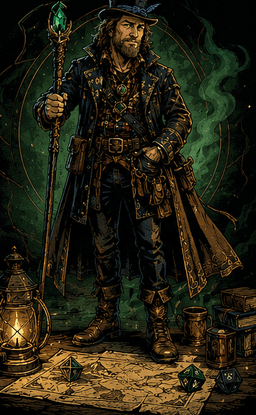
Runs the table
“Ha! Oh, that's going in the notes.”
Narrates what happens, reacts to every roll, and is never sincere for long.

“I don't break the rules — I just find the door they forgot to lock.”
Pull up a stool. DnD Max is a table that lives in your browser: open one, send your friends a code, and play on a live map with dice nobody can fudge and fights the rules settle fair. Your friends need the code and nothing else. No install, no sign-up, and no arguing over whether that was really a natural 20.
Play tonight
DMax Crawler · ranked
Season 1: Dead Mall
The same run for everybody, DMax at the controls, dice sealed. Get deep, please the crowd, top the board.
Sign in to play DMax Crawler — your score goes on the board under your name, so it needs an account (a name and a password, no email).
Classic goblin lair · One or two sessions
Gutterfang Warren
Goblins took the miller's children. The goblins are going to regret it.
Gothic dungeon crawl · Two or three sessions
The Drowned Abbey of Saint Wend
The bells of a sunken abbey ring at night. The lake is rising.
Swashbuckling heist · One long session or two
Saltmarrow: The Black Gannet Sails at Dawn
The harbour master's daughter is in the brig of a ship that leaves at first light.
Who you are playing with
An AI who runs the table, and one who sits beside you while you build it.
DMax
Runs the table
“Ha! Oh, that's going in the notes.”
Narrates what happens, reacts to every roll, and is never sincere for long.
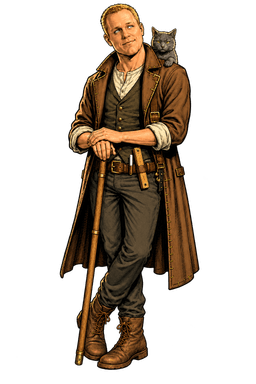
Brother Matthias
Sits beside you while you build
“Drag a box across a few squares. Anywhere. That is a room now.”
DMax's older brother. Says what to try, waits, and tells you what he heard. The cat is Nancy; she is nobody's.
What's on tonight
Everything below works right now. Nothing here is a promise.
Open a table, say how many seats, and your friends pull up a chair. Nothing to install. You'll need an account to keep a table — a name and a password, or one press with Google — and your friends sit down with nothing but the code.
Every table gets a 6-letter code and an invite link. Keep it by invitation and it never shows on the list.
Make a hero once and bring them to any table. The gear they wear changes their armour, their swing and their damage, and the sheet survives whatever happens to them.
Pick a map or bring your own, zoom about, and move your pieces square by square while everybody watches them go.
Start from a map, drag out rooms, and write what's in them: lines to read out to the table, and notes only you'll ever see. It saves to your shelf as you go.
Creatures, traps, torches, loot: ten kinds, each the right shape for what it is. Say what a room tells the table and what it keeps to itself, and whether the party learns a thing's name straight off or when somebody walks in.
The rooms you named on the fly and the bits you dropped on the board become an adventure on your shelf, in one press. Nothing moves, the night carries on, and every name stays just as you typed it in a hurry.
Somebody wanders where you didn't plan. Name the square there and then (the right mouse button on a computer, or pick the tool and tap on a phone) and it's on the map from then on. Your notes on it stay with you.
d20, 2d6, 1d20+5, 2d20kh1+7. Rolled where nobody can lean on them, shown to everyone the moment they land, with every roll of the night kept.
Roll for who goes first, take turns, swing, bleed, and close the fight cleanly. Somebody who sits down mid-brawl rolls straight in, and the log keeps every blow.
Pick your table's rules and the numbers follow: hit points, what a move's called, which dice it takes. Press any number to see everything behind it, even the bits that didn't count and why.
DMax tells the bits worth telling (a fight starting, a natural 20, somebody hitting the floor) and pulls faces at the table while he does it.
Bring a map from your own computer and use it at any table. Everything people bring goes on the shared shelf with their name on it, so a good map doesn't get stuck at one table.
Mark a moment and bring the whole table back to it another night: heroes, map and fight, just as you left them.
Draw a wall and it stops people, or warns them, or doesn't care, as your table likes. Doors open. Deep water's no good for walking and shallow water is. The map argues back.
A creature moves before it swings, reaches as far as its own rules say, and might have more than one trick. Something can wander in mid-night, and the party needn't see it coming.
A clock that fills while the party dithers, and supplies that run down as they're used. Both sit on the table for everyone to see, and spending the last one tells you why there's no more.
Some games don't roll for who goes first. A ruleset can have a spotlight the host hands round by name, or no turn order at all, and the table only offers what that ruleset really has.
Write a chart, point a square at it, and it rolls when somebody walks in. Making one's a single press, and you can make it right where you're stood by typing a name that starts with a dollar sign.
One press shows every map in the adventure with its ways through drawn in, so a ten-map dungeon has a shape you can see. Nobody moves, and one press puts you back on the board.
Save what you built as a file and hand it over. It opens in their account with the same rooms, things and ways through, and it's theirs. A file that isn't one gets turned away by name, not half-opened.
A name and a password, no email, about forty seconds. Your name, your heroes and your tables follow you to any screen you sign in on. Sitting down at a friend's table still asks for nothing.
Worlds Without Number, Cities Without Number, Lasers & Feelings, Fate, Knave, Dungeon World and more, each with its own dice, its own words and its own idea of whose turn it is. Pick one when you open the table and everything follows.
Start from any ruleset and change it without opening a file: a bonus here, a new chart there, a supply that runs down. Switch house rules on and off at the table, and share them with a code.
A crowd meter that climbs with every crit, a floor clock that resets on the stairs, sponsors whose gifts come with strings, loot boxes, awards and an announcer with opinions. Opt in, and the night's best run goes on the board.
Put a rule change in a sentence and let the table vote. Say “that didn’t happen” and wind back a step. Seal the dice so anyone can check afterwards that nothing was rigged.
DMax can run the whole night or sit beside you. He remembers last time, carries a story across nights, answers “can I do this?” from the real rules, talks out loud, and can be a Dungeon Master you wrote yourself.
Start from a ready-made hero or make your own, take quests, level up and earn the moves that come with it. What the party finds can go on your own sheet and come with you to the next table.
Sit down on a phone and press 📱 Phone controller, and it's your hero in your hand: your spells and moves with what each one costs, your bag to wear, use and hand round, a book with your sheet, your quests and a notepad that's still yours next week, and a quiet word with the DM. It buzzes when it's your turn, and it keeps its place on your home screen. Put the board up on a TV with the projector view.
Follow people and see what they're running. Discover puts open tables, shared adventures, shared rulesets and pictures in one list, and friends can spot each other on the leaderboards.
Every player gets a page — what they've published, what they're running tonight, and as much or as little about themselves as they choose. Ask somebody to be a friend, write to them, and save a friend a seat in one press; they're told about it, in words, in one place. Block and mute work everywhere, a table included. Sitting down at somebody's table still asks for nothing at all.
Open your doors to strangers and DMax runs the night start to finish. Sit down with no hero and get one in a press. Or go live: your table goes to the top of Discover and anyone can watch without touching a thing.
Put your own pictures on a piece or a face. In the builder, press ✨ Make a picture for this map and one's drawn from the room you're describing: you see the words first, it's saved with your things, and it's marked as AI-made.
Carry a torch and the dark gives way as you go. Each hero sees only what they can see — round a corner is round a corner — and darkvision means you see it differently, not better. Overland, the road has a clock, and torches and rations burn down while you walk it.
A quest has steps that tick themselves off: fetch the thing, put somebody down, reach the place, talk to the person. It can branch, it can fail, and it can hand you to the next one. Hand it in where you were asked, and what you fetched actually leaves your bag.
Not a narrator over the top of your game — a DM. He sees the board, paces the night from the first door to the big finish, makes rulings, and remembers what happened last week when you come back. The engine still decides every number; he never touches it.
Every persona speaks in a voice of its own, on every screen that reads aloud. Push to talk at the table, cameras on the seats, and a voice dock that gets out of the way on a phone.
Build one step by step or from an idea in a sentence. Classes differ now in the ways that show at a table — paths, a trademark of their own, knacks, and where they came from — and a fight bites back: conditions that do things, cover, hazards, monsters that use what they have.
Ask the oracle a yes-or-no question and the dice answer — sometimes “Yes, and…”, sometimes with a twist. Roll about thirty tables for the world you are in: names, rumours, weather, what they want, what they are hiding, what is in the way. Treasure gives real things at real prices, traders sell from the same list in that world's own coin, and DMax can roll any of it while he runs the night.
The DMax Crawler: a sealed, DMax-run night with the dice locked, scored and ranked for all to see on the Solo, Party and Fan favourite boards.
Dwarfy or Brother Matthias sits in the builder's rail and you can just talk to them — about the map you are making, what goes in the room, and what the rules would say about it.
All seven are real solids — a tetrahedron, a cube, an octahedron, a trapezohedron, a dodecahedron, an icosahedron — genuinely thrown across a tray and landed on the face the engine rolled, not pictures of dice spun about. Dress them in a set that says what they are made of: the face, the edge, the numeral, and how the light sits on them — or put your own pictures on the faces, one for all of them or a different one on each. Publish a set and it goes in a pool other people browse, like and take; your own page gathers everything you have made. And every roll is kept, so you can see what each of your dice has actually done.
Every evening is written down: the quests you took and finished, who you met and how they took it, what you found, who went down. DMax reads it back next time in his own voice — and if he names anybody you have never met, you get the plain version instead. The innkeeper remembers that you lied to her, because somebody rolled badly in front of everybody and the game kept the number. He can sketch out who is really behind it all, from what actually happened, and you decide whether that is your campaign. Your hero carries their own story to anybody else's table, unless you would rather they didn't.
A hero at zero is not simply out any more — they are slipping away, with a save each time their turn comes round and the count showing on the piece so the table can see it. A friend in the next square can spend their whole turn to steady them. How many rolls, and whether it ends in dead or just out for the night, is the ruleset’s call: Knave kills you, MAX LEVEL puts you out and lets a natural 20 bring you back.
How to do all of this: the Guide — step by step, with pictures.
Where this is going
Every issue in the project, what state it is in, and what is actually left in it — generated from the issue files themselves, so it cannot drift from them.
477 of 497 issues built — 160 shipped and 317 working but not looked at yet — with 4 part-built and 16 filed and not started.
See the roadmapThe Legal Ledger — every ruleset we host and whose it is. · Privacy · Terms